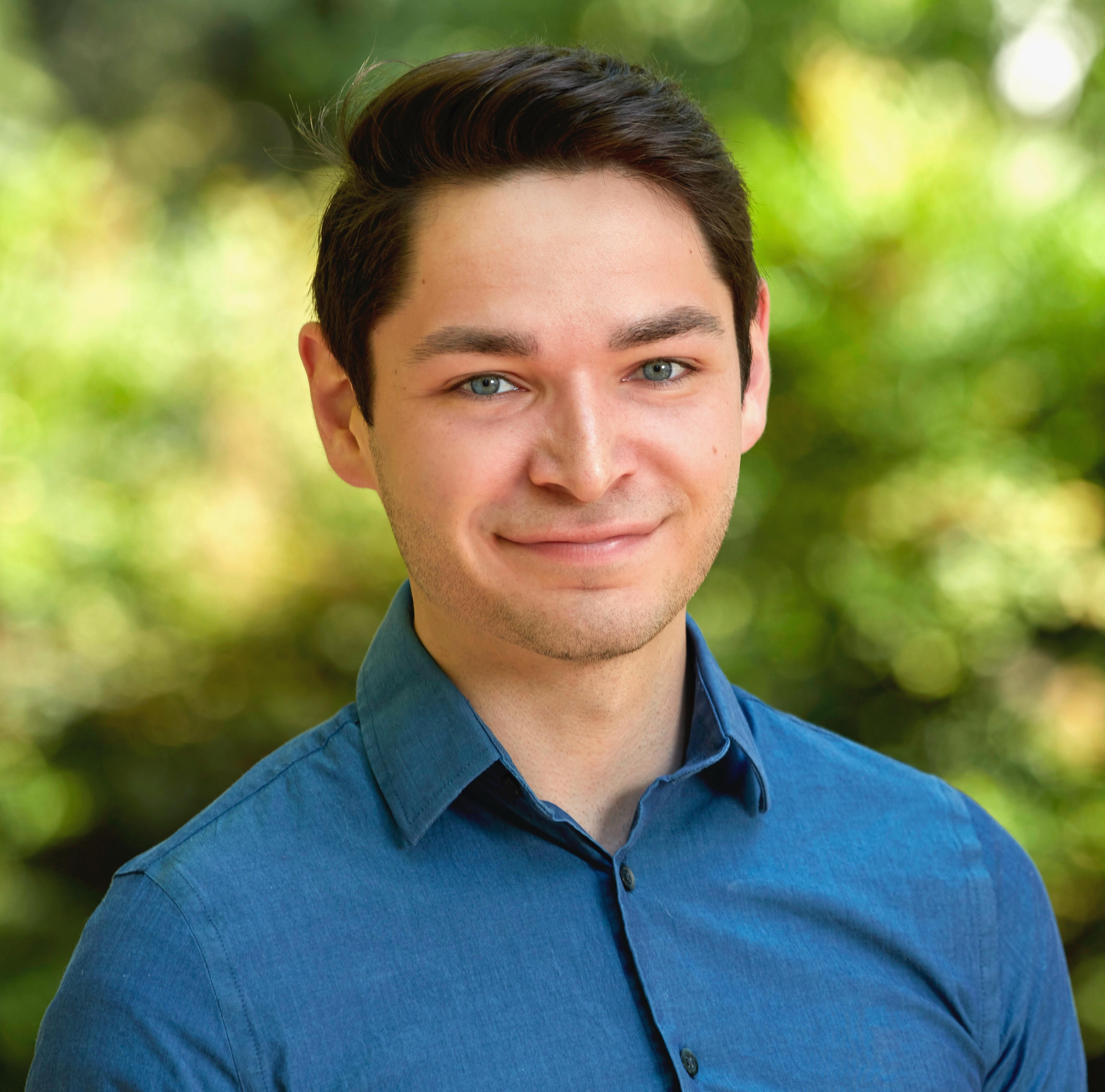
My name is Donald Loveland and I am a Research Scientist on the User Modeling and Personalization team at Snap Research. Simultaneously, I am completing my Ph.D. in Computer Science and Engineering at the University of Michigan, Ann Arbor, where I am advised by Danai Koutra. My doctoral work has been supported by an NSF Graduate Research Fellowship and a Rackham Merit Fellowship. I am scheduled to defend my dissertation in March 2026.
Research
My research centers on graph representation learning and generative recommendation systems, with an emphasis on interpretability, robustness, and efficiency in large-scale machine learning. A central theme of my work is identifying and mitigating the limitations of current graph and language models—specifically how structural bias, representation distortion, and incorrect inductive biases impact downstream performance.
As a Research Scientist at Snap Research, I apply these principles to next-generation recommendation systems, studying how generative and graph-based models can be combined to improve personalization under real-world constraints.
Prior to joining Snap full-time, I held research roles across industry and national labs:
- Summer 2025 | Amazon: Investigated large language models for graph reasoning, with a paper currently in progress.
- Summer 2024 | Snap Inc.: Worked on improving the efficiency of collaborative filtering models and addressing popularity bias in recommendation systems.
- Summers 2022 & 2023 | MIT Lincoln Laboratory: Focused on combinatorial optimization over networks and applied machine learning for graph-structured data.
Before beginning my Ph.D., I was a staff scientist Lawrence Livermore National Laboratory, working as on machine learning for materials science. There, I worked on graph deep learning for molecular modeling, inverse design of molecular graphs, and post-hoc interpretability for neural networks. My earlier contributions also include developing generative counterfactual methods for extracting actionable insights from convolutional neural networks in computer vision.
Mentoring
As a first-generation college student, I am deeply grateful for the guidance I have received throughout my academic and professional career, and I aim to pay this forward by supporting students from similar backgrounds. I have served as a peer mentor for first-generation undergraduate students throughout my graduate studies, and while at Lawrence Livermore National Laboratory, I helped organize and mentor a two-week machine learning challenge focused on teaching students how to conduct applied research. Please feel free to reach out if you’d ever like to chat.